



Testing backed by clinical methods
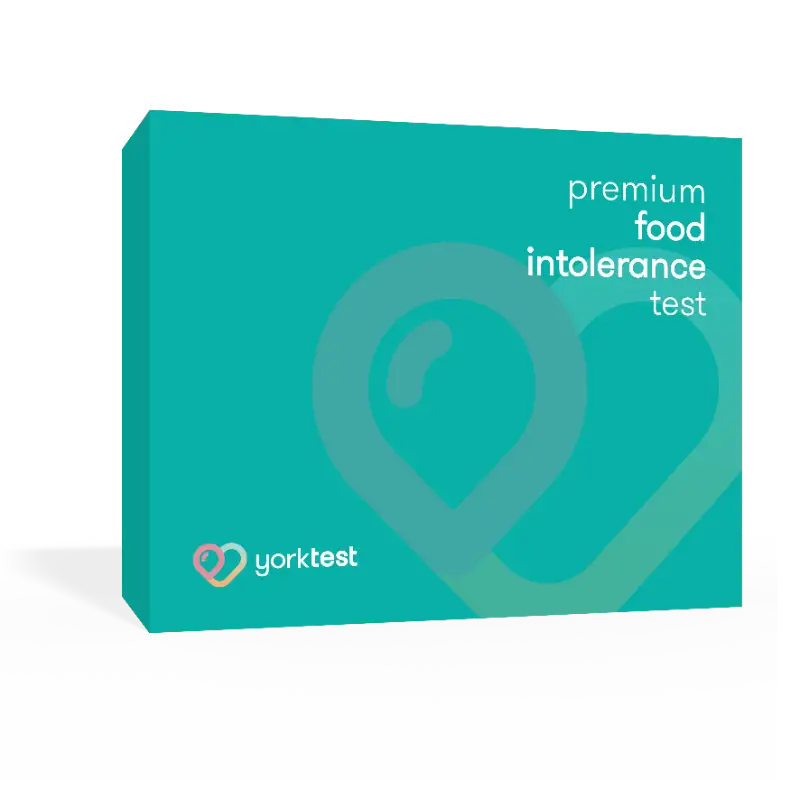
Food Intolerance Test
Tests for 200+ food & drink ingredients (key ingredients, grains, dairy, meats, fish/shellfish, fruits, vegetables, nuts, herbs/spices, drinks.
Simple finger-prick blood test
Foods & drinks guidebook for you to track your progress
Measures all four subtypes of food-specific IgG
Pharmacist-led interpretation
Must be 2 years old or over to take the test
Test not suitable if customer is pregnant or breastfeeding
Common Symptoms of Food Intolerance
IgG-related intolerances can cause delayed reactions, sometimes up to 72 hours after consumption.
Digestive issues
Headaches
Fatigue
Skin problems - eczema , psoriasis, acne
Muscle and joint pains
Weight management challenges
Understanding Test Results
Green – Normal Reactivity:
IgG antibody levels are within the normal range. These foods can be consumed as usual.
Orange – Borderline Reactivity:
IgG levels are borderline. Reducing these foods may be beneficial.
Red – High Reactivity:
Elevated IgG levels. A 12-week elimination period is often recommended.
Important Considerations Before Testing
If a client has been avoiding certain foods for more than six weeks, their IgG levels for those items may not register in the results.
If they are avoiding foods due to known reactions, we do not recommendreintroducing them solely for testing purposes.
However, if they would like those foods to be included in the test, they would need toconsume them 2–3 times per week for six weeks prior to testing.

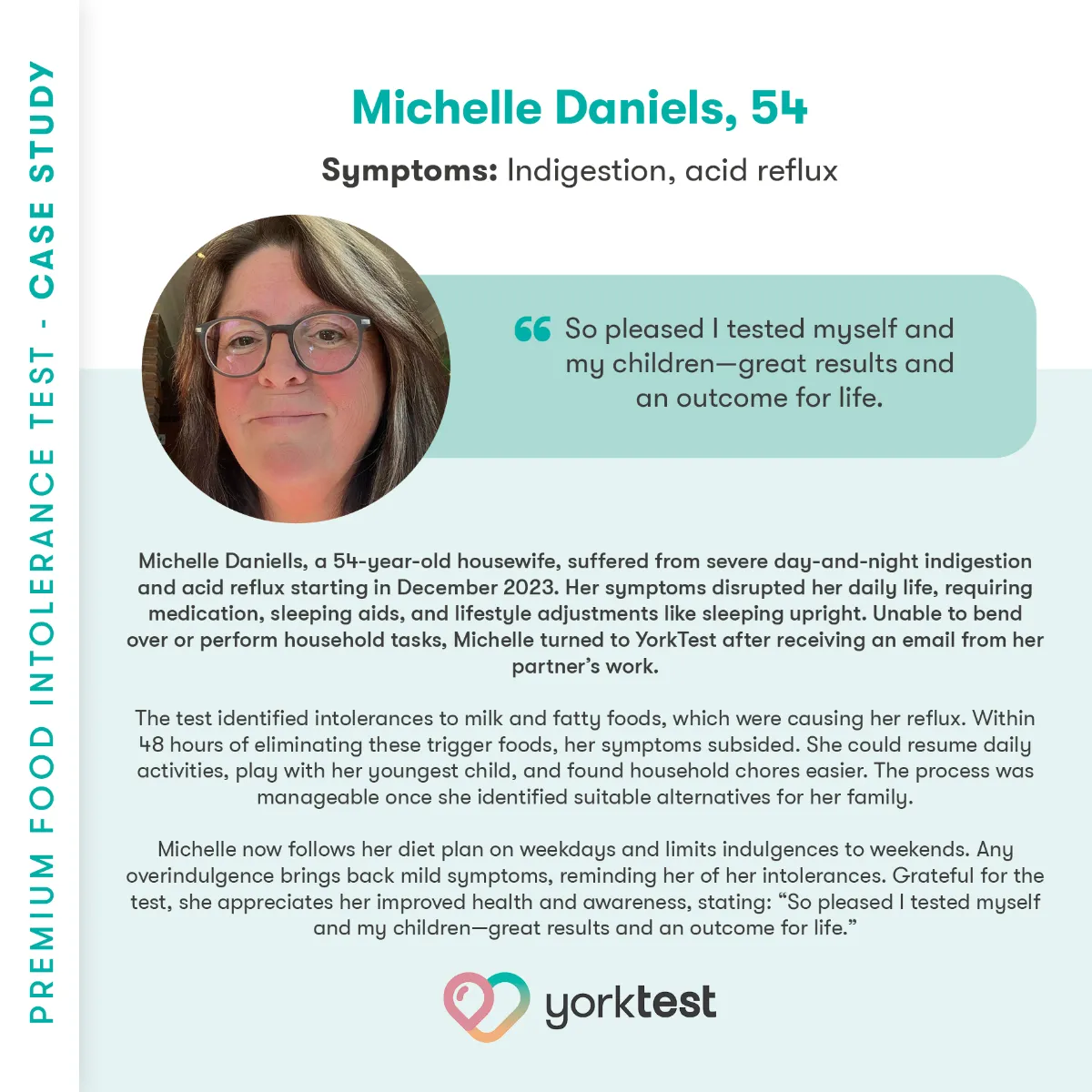
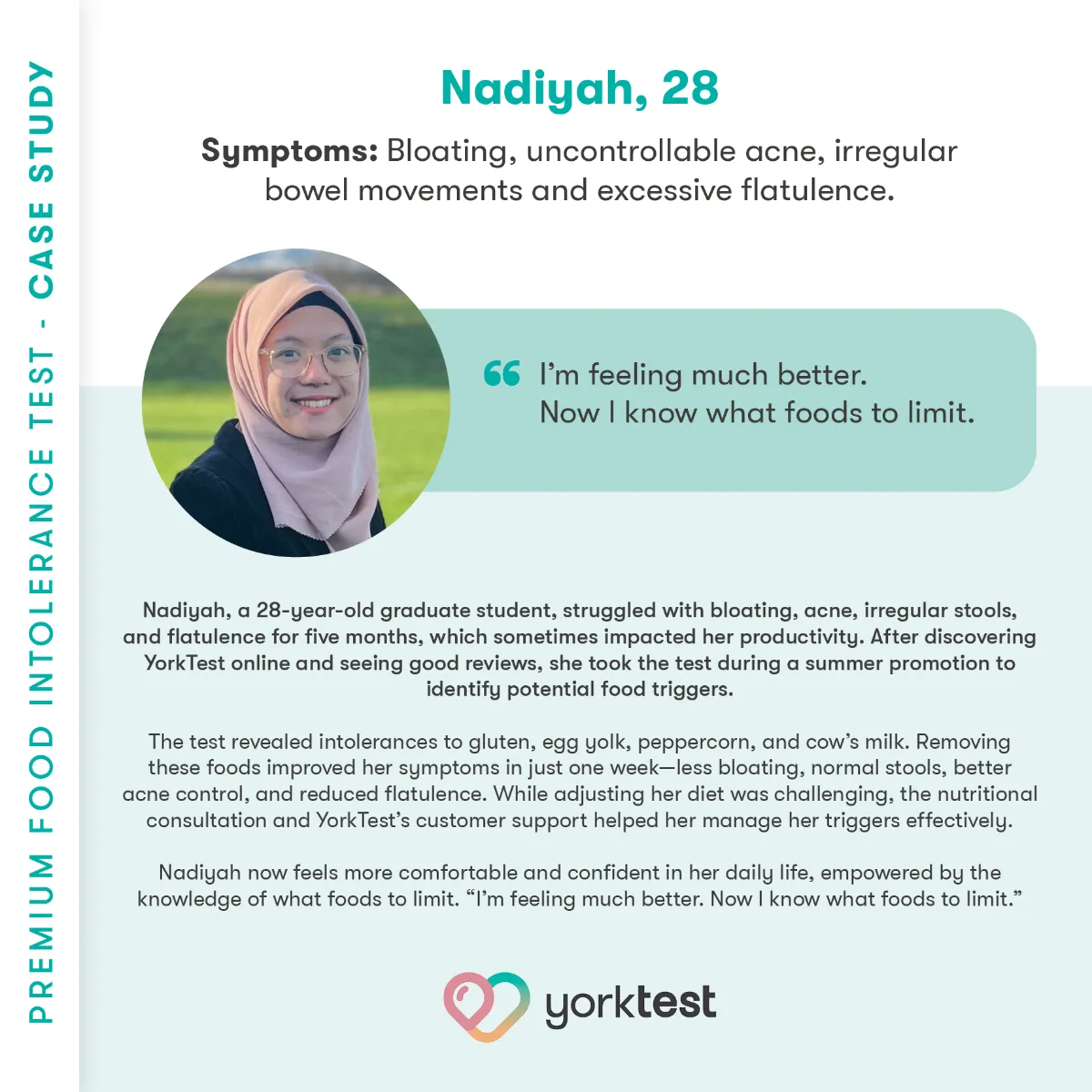
Real stories, real relief
See how identifying food intolerances has helped people take control of their health and wellbeing.
Every journey is different, but the outcome is often the same — clearer answers and meaningful change. These case studies show how customers using YorkTest have uncovered food intolerances, adjusted their diets, and experienced improvements in everyday symptoms and quality of life.




Helpful guidance from experienced pharmacists
Support That Makes a Difference
We focus on easy-to-follow advice that fits into daily life. Whether you need a clear elimination plan, safe food swaps, or emergency action guidance, our team supports you every step. We prioritise practical outcomes so changes are sustainable and beneficial to your wellbeing.
Common Questions About Testing
Frequently asked questions to help you understand processes, timelines, and next steps.
What is the difference between allergy and intolerance?
Allergies involve the immune system and can cause immediate reactions, while intolerances typically affect digestion and cause delayed symptoms. Testing helps clarify which you may have.
How long until I get results?
Turnaround depends on the specific test; most results arrive within 5 to 14 days. Exact timing is provided when you book.
Can children be tested?
Yes. Many tests are suitable for children; we assess suitability and guide parents through preparation and interpretation.
Do I need a referral from a doctor?
Referrals are not usually required for basic testing. For specialist allergy assessment or if anaphylaxis is suspected, we recommend medical referral.
Will testing tell me exactly what to avoid?
Tests identify markers and likely triggers but should be combined with symptom history. We provide practical elimination and reintroduction plans rather than blanket restrictions.